
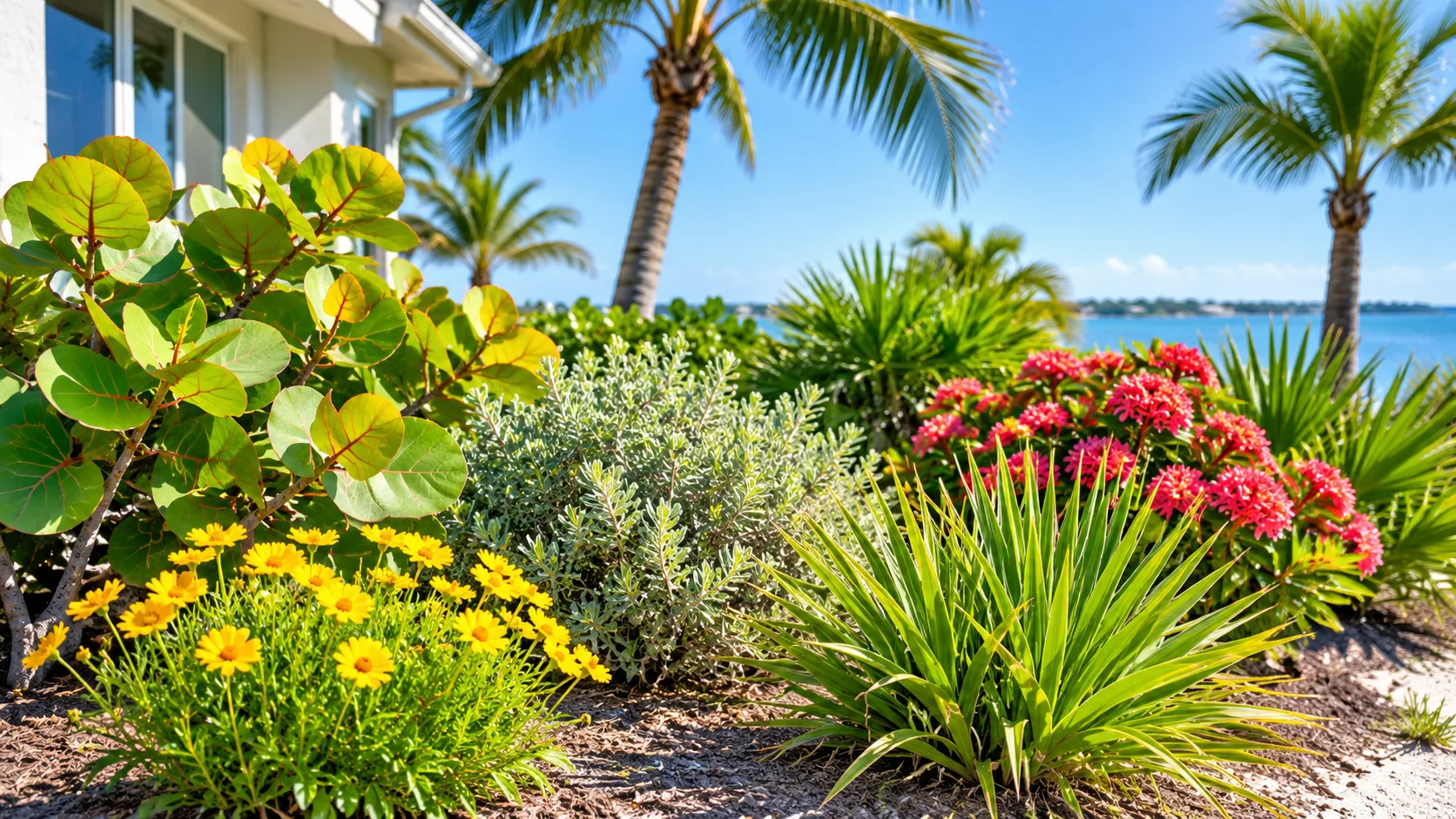
Best Florida-Friendly Plants for Coastal Landscapes
Coastal landscaping in Pinellas County presents unique challenges. Salt spray, sandy soil, intense sunlight, and occasional strong winds can affect plant health and growth.
Fortunately, many Florida-friendly plants tolerate these conditions when placed in suitable locations.
Whether you live in St. Petersburg, Clearwater, or Treasure Island, selecting appropriate plants can help create a beautiful, manageable outdoor space.
1. Sea Grape
Sea grape is a popular coastal plant recognized for its large, rounded leaves and tropical appearance.
It tolerates salt spray, sandy soil, and coastal winds, making it suitable for many shoreline properties.
Depending on growing conditions, sea grape can develop into a large shrub or small tree.
However, homeowners should consider mature size and applicable coastal vegetation regulations before planting.
2. Saw Palmetto
Saw palmetto is a Florida native commonly found in sandy environments.
Its distinctive fan-shaped leaves add texture and natural beauty to residential landscapes.
Once established, saw palmetto tolerates drought and generally requires limited maintenance.
It works particularly well in naturalized planting areas with adequate space for growth.
3. Coontie
Coontie is a low-growing native plant with attractive, fernlike foliage.
It adapts well to sandy soil and tolerates periods of drought after establishment.
Additionally, coontie supports local wildlife by serving as a host plant for the atala butterfly.
This plant works well in garden beds, shaded areas, and landscape borders.
4. Railroad Vine
Railroad vine is a spreading groundcover commonly found along Florida's beaches.
Its purple flowers and trailing growth make it an attractive choice for sandy coastal locations.
The plant tolerates salt exposure and helps stabilize loose sand through its extensive growth.
However, homeowners should provide sufficient space because railroad vine spreads quickly.
5. Muhly Grass
Muhly grass is a native ornamental grass known for its soft, pinkish-purple flower plumes.
It tolerates sandy soil and periodic drought once established.
This attractive grass works well along walkways, garden borders, and open landscape beds.
Its seasonal color also adds visual interest without requiring complicated maintenance.
Maintaining a Healthy Coastal Landscape
Even salt-tolerant plants require proper care during establishment.
Water newly planted vegetation consistently, choose suitable locations, and avoid unnecessary fertilizer applications.
Also, remember that direct salt spray creates different growing conditions than occasional coastal exposure.
Selecting plants based on your property's specific conditions helps support long-term landscape health.
Royal Tree Service provides lawn care and related property maintenance services throughout Pinellas County, FL.
Choosing plants suited to Florida's climate helps create healthier, more sustainable landscapes. The Florida-Friendly Landscaping Program (opens in new tab) provides helpful guidance on selecting plants and maintaining landscapes throughout Florida.
Native plants can help homeowners create attractive landscapes suited to local growing conditions. The Florida Native Plant Society (opens in new tab) offers educational resources about native species and their role in Florida's natural environment.